

Finding Food and Stretching Dollars
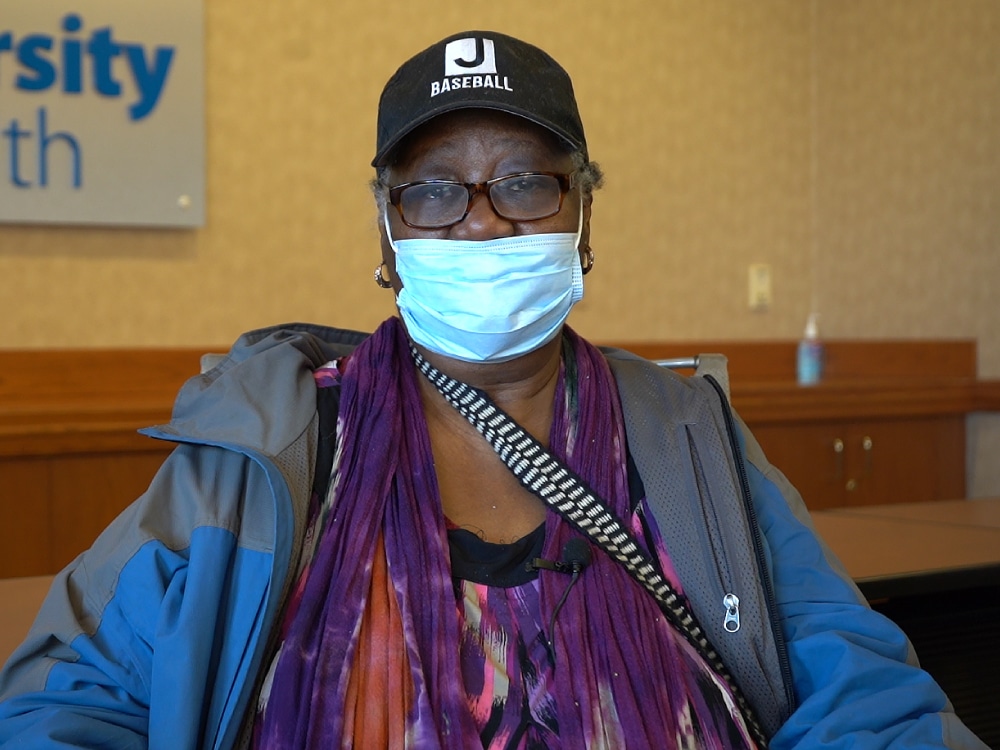
Mary Powell dreads grocery shopping.
“Bananas are 57 cents at Aldi’s. I just keep pushing my buggy to go (to another part of the store) where I can afford it,” she says. “The other day I bought a sweet potato, and I was going to return it. I didn’t know it cost that much.”
Recent inflation has stretched the Midtown resident’s food budget to the breaking point. She stopped eating eggs when the price for a dozen reached $6.
She is grateful she can turn to University Health’s One World Pantry, a Food+ program partner, and one of more than 760 nonprofit agencies who receive food and related household products from Harvesters.
“Eggs are so precious. I used to eat eggs for breakfast, but I had to stop,” she says.
When the price of a single apple jumped over $1, she could only afford to purchase a single apple.
“I was so careful how I ate that apple,” she says.
Powell avoids food waste, and it pains her to see others throw away perfectly good food. She wonders if there is a way to boil eggs shell to make a broth, like the way she uses chicken bones and potato peelings.
Powell has a standing appointment on Tuesdays at University Health’s One World Pantry. On a recent visit she beams at news she will take home a loaf of bread.
“I’m always asking if they have bread,” she says. “It’s not that I eat bread a lot, but sometimes I want to make a sandwich. But bread has been $4 or $5. Now, when I go to the store, I don’t have to buy those things. The fresh stuff has helped me. The canned stuff will fill you up, but the fresh stuff is best.”