

Getting to the Root of Food Insecurity with Food+
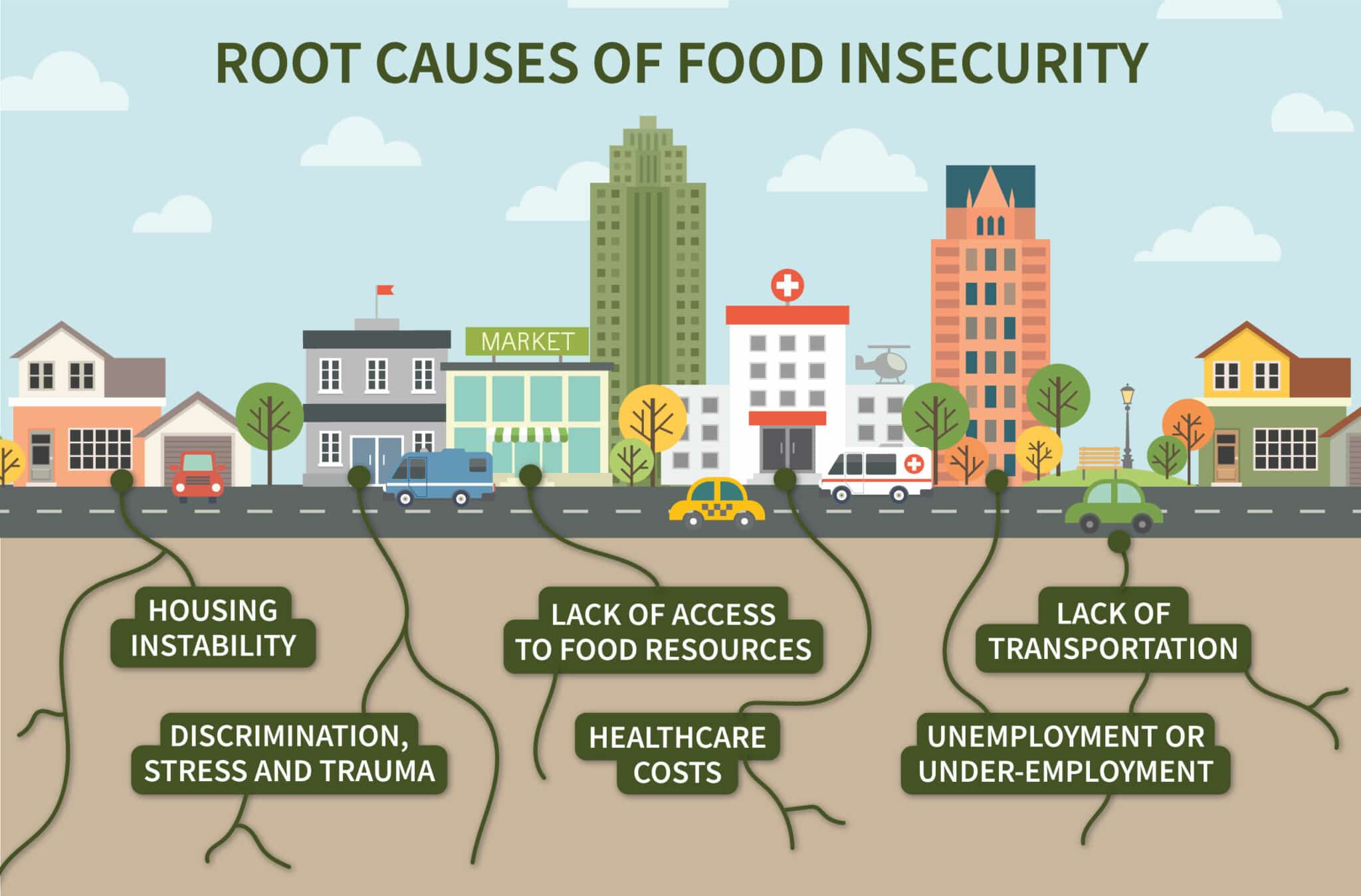
Food insecurity is…complicated. Sure, on the surface, it means that someone does not have consistent access to adequate or nutritious food. However, needs do not exist in isolation. To truly understand and address food insecurity, it’s necessary to look at the social drivers behind it.
Economic stability, access to quality healthcare and education, and one’s neighborhood and built environment all play into why a person may be food insecure.
Someone who is unemployed may find it difficult to make it to an interview or be considered for a job if they don’t have access to reliable transportation.
Someone in a small rural community or urban food desert may have limited access to nutritious food options.
And someone experiencing a physical or mental health crisis will oftentimes struggle with earning a steady income or making healthy nutrition choices. With a handful of compounding factors, food insecurity can happen to anyone.
“We truly don’t know anyone’s story,” says Danon Hare, Food+ Program Manager. “There a million adages to be said about it: ‘never judge a book by its cover’, or ‘you can’t take anything at face value’ come to mind. So many factors feed in to why someone might be seeking food assistance, and oftentimes food isn’t the only reason they may be seeking help.”
Harvesters’ Food+ program was started to address the root causes of hunger, in addition to providing food to our neighbors. We’re committed to developing and cultivating partnerships with organizations in our service area in the areas of healthcare, transportation, education and economic development.
“We know that food assistance isn’t the only way to solve hunger in our service area,” Hare says. “With that mindset, we strategically partner with organizations that are interested in addressing the social drivers of health and help broaden their reach with information, action and support. We can start the conversation with removing barriers to food access, but what else can we do to dig deeper?”
Collaborating with Healthcare Providers
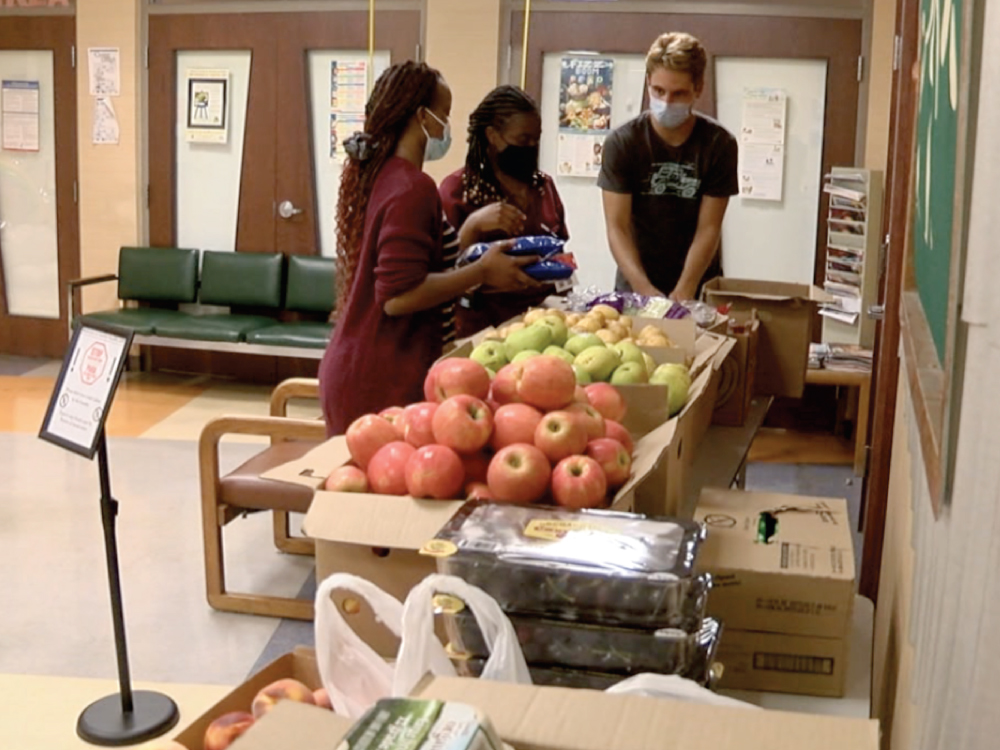
Access to nutritious food is essential to managing or even reducing chronic health conditions, but sadly, many suffering from them also are experiencing food insecurity. In our region, 62% of households visiting a food pantry report at least one member with hypertension, and 37% report at least one member with diabetes.
Harvesters partners with several healthcare providers in our service area to administer food insecurity screenings upon patient intake. The survey includes answers like: “Within the past 12 months we worried whether our food would run out before we got money to buy more,” or “Within the 12 months, the food we bought didn’t last and we didn’t have money to buy more.” Those who check those boxes can then be referred to our services or those from one of our agency partners.
In addition, we provide partnering health organizations with Healthy Pantry Staples Kits for those who request them. These kits are assembled with a dietitian with staples like whole grains, shelf stable vegetables and ingredients with no added sugars to help manage chronic health conditions.
“There is a lot of momentum around “Food is Medicine” projects and pilots with our healthcare partners and broadly in the healthcare sector,” Hare says. “Many of our healthcare partners like having the food resources to help a patient with hypertension or diabetes on hand right after their appointment. One barrier removed to healthy food access can go a long way in ensuring that we have the variety they need can be a challenge.”
Taking the Show on the Road
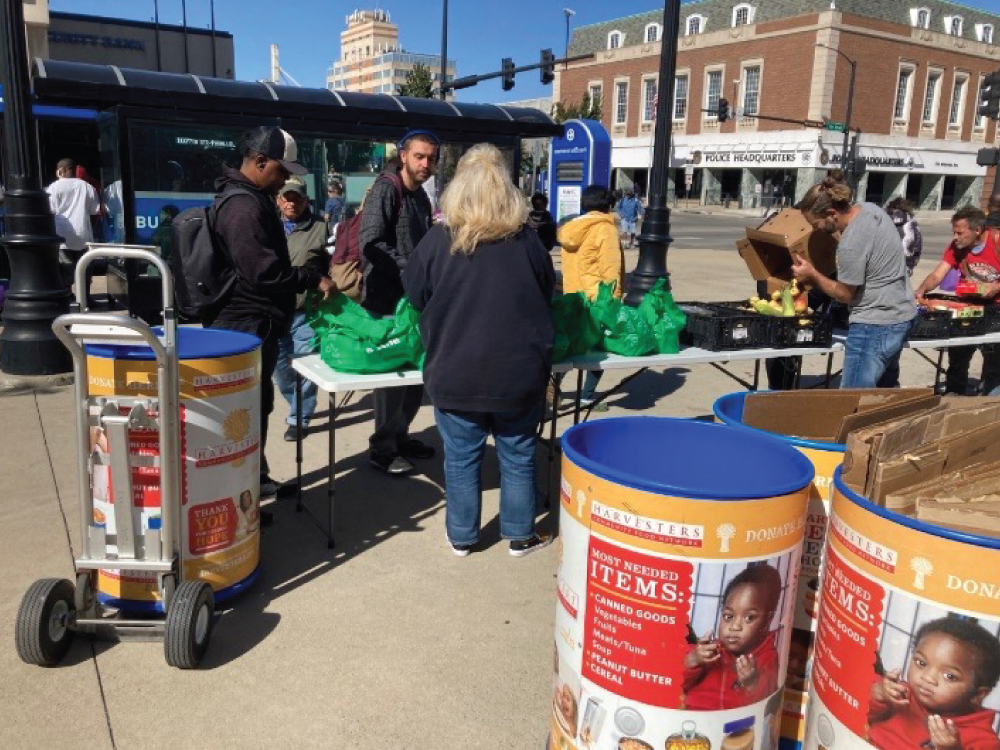
For those who may have barriers to getting to a pantry, we routinely offer pop-up produce distributions in Clay, Jackson, Platte counties. At these distributions, attendees can often get help get signed up for SNAP and WIC, receive recipe resources and watch nutrition demos.
Bus Pop-up Pantries are another way we’ve sought to offer food assistance to our neighbors who rely on public transportation. Those riding the bus can hop off, get some food items, and hop back on the bus, saving time and making sure they have what they need for some nutritious meals. We are also partnering with Kansas City Area Transit Authority, Lawrence Transit, and Topeka Metro to create a mapping tool displaying Harvesters’ partner agency food pantries located near bus stops in these metro areas.
Moving on Up
Education is a key factor to having a stable income. However, it’s hard to focus when you’re hungry. It’s even harder to climb the career ladder when you’re struggling with ongoing food insecurity. We provide food to local workforce development organizations to help support participants as they seek to acquire new skills, find job placement opportunities, and work toward more stable economic situations.
Here are some of the amazing organizations that our Food+ team partners with. Click here to learn more about the program!